Landscape Concept Study

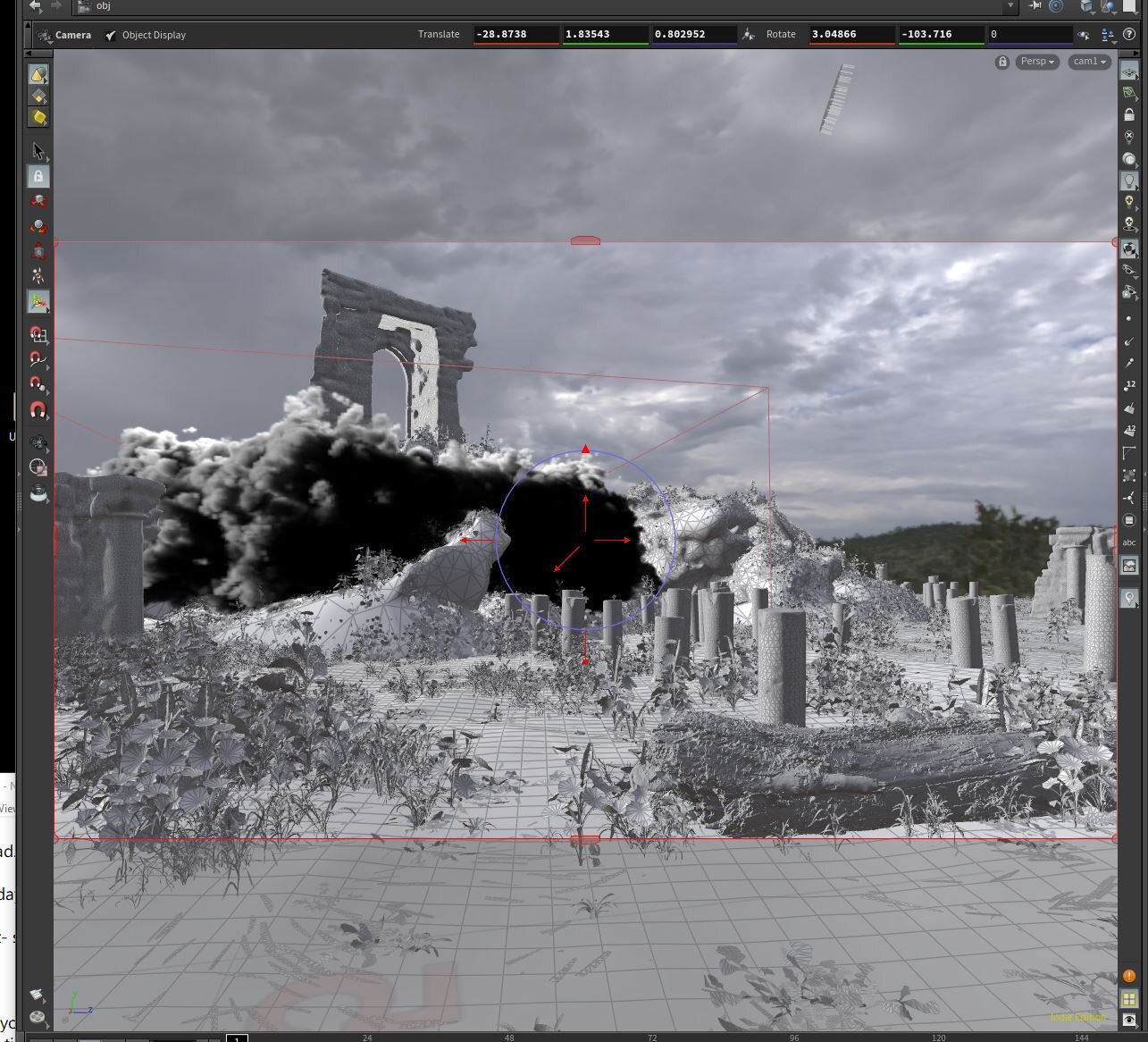
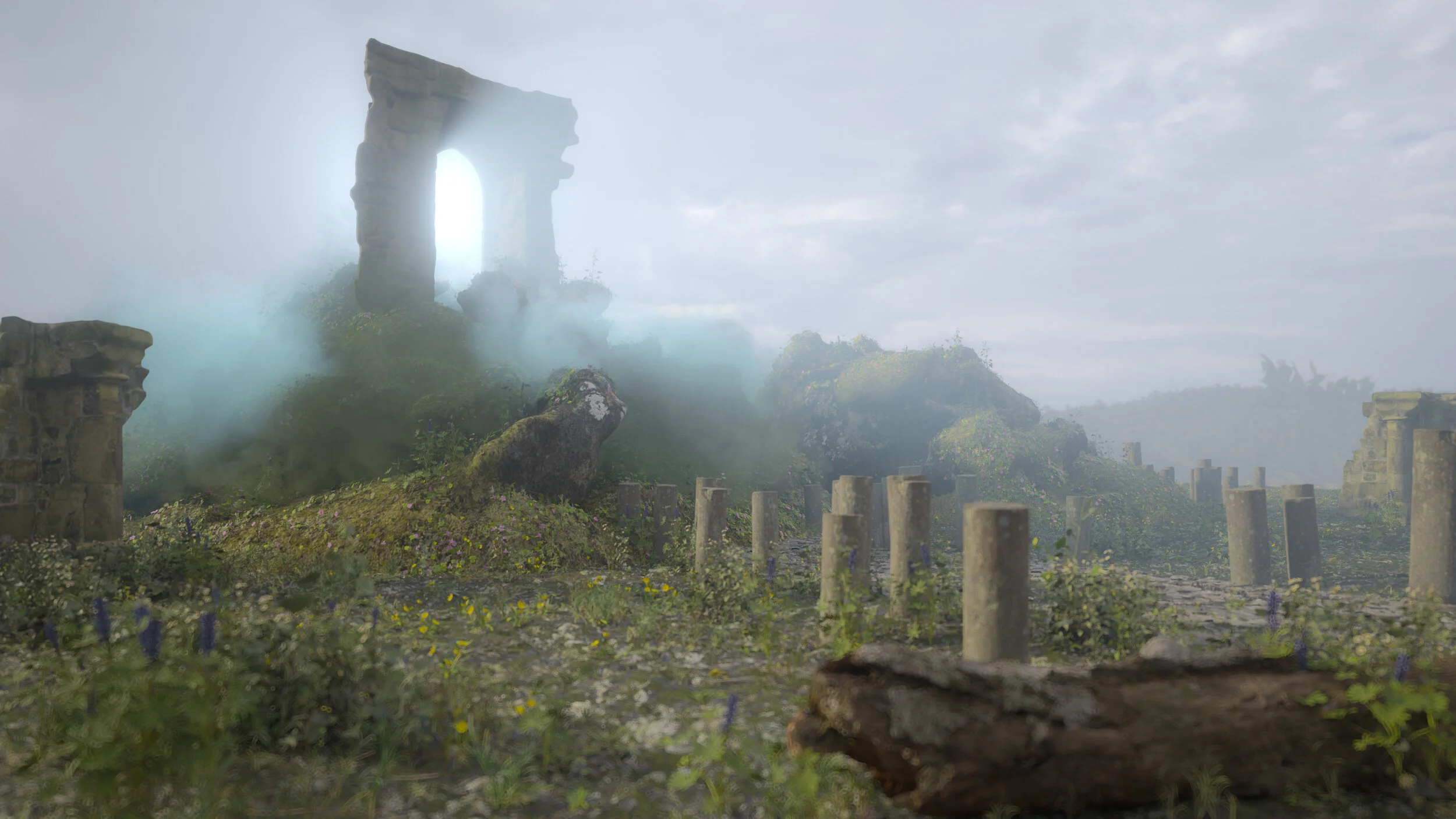
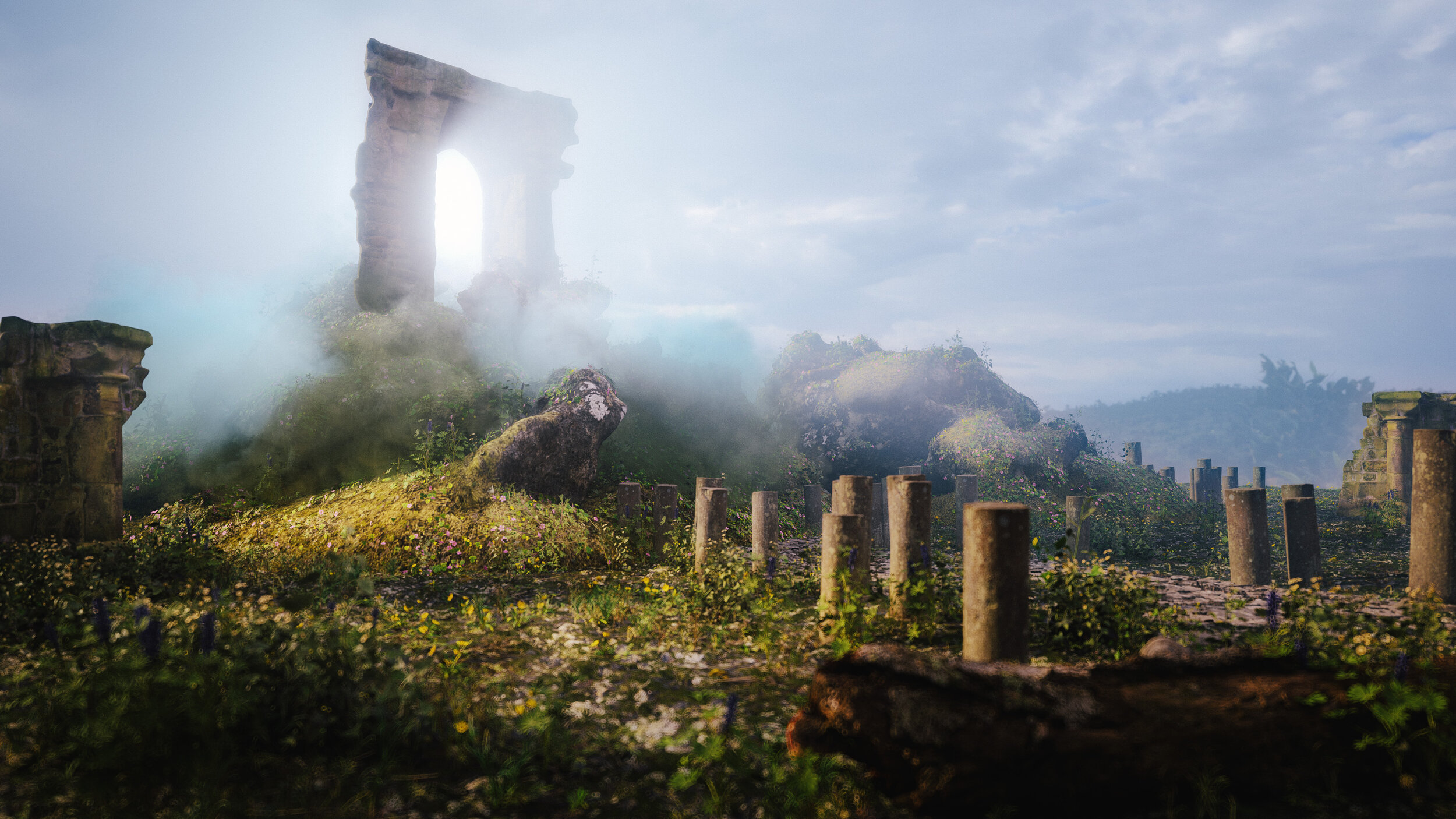
I have been playing with this landscape piece in Houdini for a while now and finally got it to an interesting place. It’s my first landscape in Houdini and using Quixel Bridge has been amazing. It is integrated with Houdini in such a fluid way. They made it one click to import everything ready to go in Houdini and Redshift. I still struggle with so many little things in Houdini and take classes CONSTANTLY, so to just be able to click on a plant and have it import with scatter nodes and materials all set up is a crazy time saver.

Another little mental leap for me was being able to art direct the smoke how I wanted without bashing my head against the monitor for a day.

Did some post work in Photoshop of course. ;)
New Ep cover art to share

Just finished up this illustration for a upcoming EP from the band We Are Parasols. C4d and Redshift on this one. Put some VDBs in a cloner instead of going into Houdini and making the smoke / clouds from scratch. Pretty happy with the outcome.

Marvel Universe Maddness!

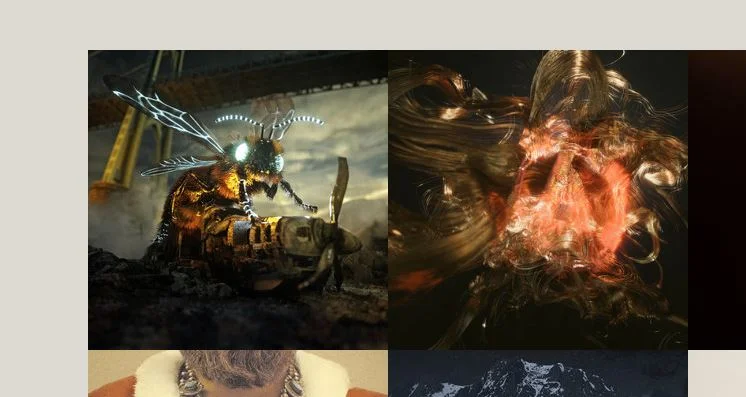
Just posted a some illustration / retouching I did for Marvel Universe in the Portfolio. Go check it out!

Some recent stuff

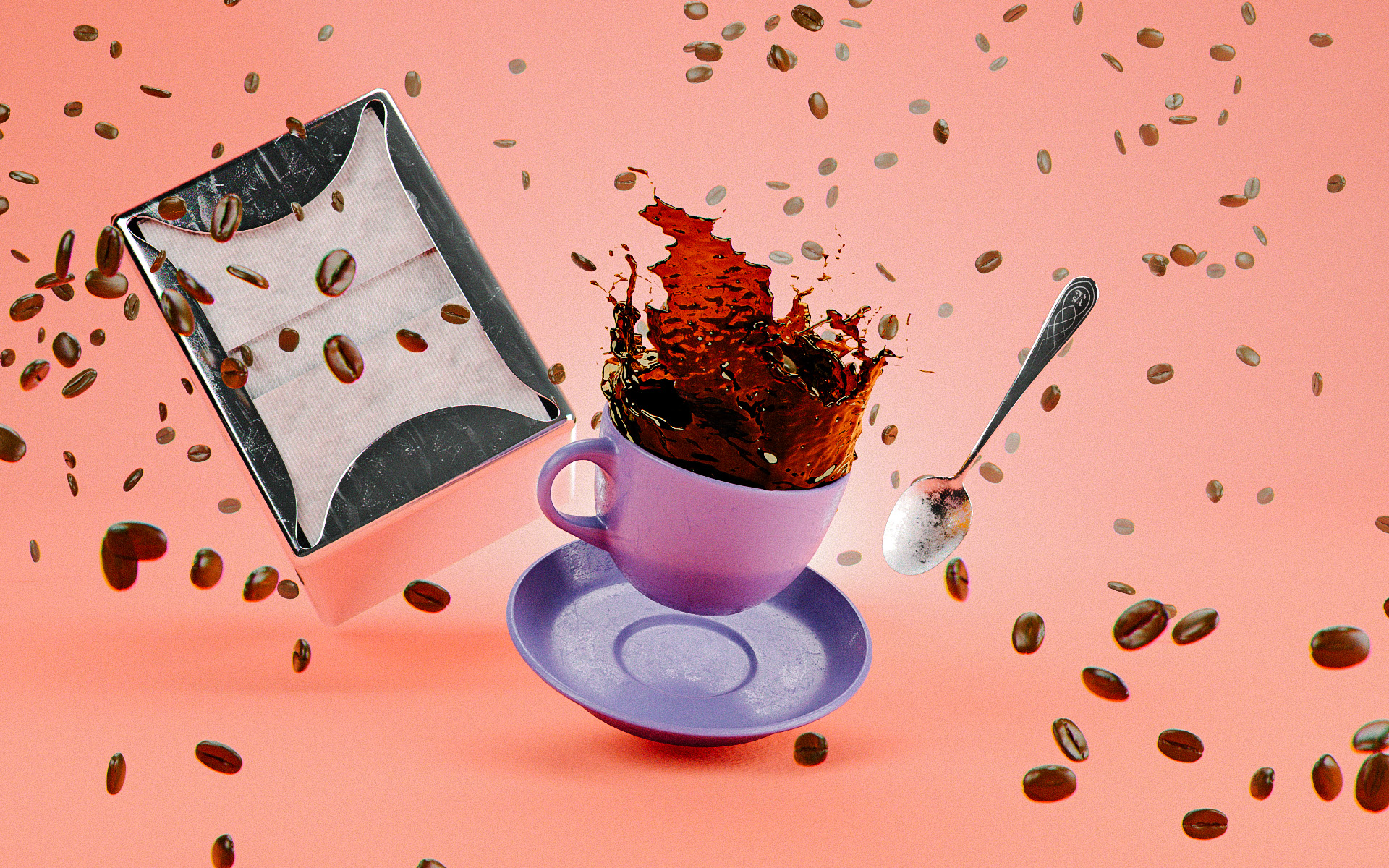
Been kinda messing around with all sorts of things lately after doing a deep dive into Redshift. Worked up a vellum grains simulation in Houdini, a cityscape concept in C4d,a cat skull abstract piece and a more playful grapich coffee thing. Next deep undertaking is going to be doing more of a study on how to make abstracts in Houdini. Gonna dive into particles and messing with geo on a deeper level.

Music and life tips

“your path for achieving success is two fold: 1. play great. 2. in all things, be easy to deal with.

reconcile yourself to these facts every waking moment of a tour, or other business engagement of any kind within this scenario. if you forget the rule for even a very short time span, there's going to be static. you can also reverse engineer this, detect some static? have you remembered our little rule?
there are some that will never get these concepts, there are some that can learn them, and sometimes people come along that are pretty much born for this role. you can easily determine if you are in the first group by taking an accurate inventory of your self-centeredness. folks that are really all about their own trip are miserable in this role of sideman. and they make everyone else miserable as well. i'm not intimating that this type of person is bad or anything, however, they might should consider forming their own band.”

Skull Study

Messing around with volume meshes in Cinema 4d today and came up with this little study. It’s fairly tricky to work with Redshift materials in the C4d window though. Can’t see a damn thing in the viewport. Just basically keeping adding shapes into the volume till you get the shape you want.

Splish Splash!

Little water study while trying to maintain some readability.

The Fasting Cure Is No Fad

“Fasting is one of the biggest weight-loss trends to arise in recent years. Endorsed by A-list celebrities and the subject of a spate of best-selling books, it was the eighth most-Googled diet in America in 2018.

But fasting shouldn’t be dismissed as just another fad. At the Charité University Hospital in Berlin, I’ve employed what’s called intermittent fasting, or time-restricted eating, to help patients with an array of chronic conditions. These include diabetes, high blood pressure, rheumatism and bowel diseases, as well as pain syndromes such as migraines and osteoarthritis.

There are different ways to go about it, but I advise patients to omit either dinner or breakfast, so that they don’t ingest any food for at least 14 hours at a stretch. That makes lunch the most important meal of the day. It also reduces the time spent each day processing food and lengthens the period devoted to cleansing and restoring the body’s cells, both of which have positive health effects. “

I started practicing this this year after doing Whole 30 in January and I find it really helpful. I am down almost 20 pounds for the year. Highly recommend it.

Testing some more Shaders

Working on some more Redshift today trying to dial in some shaders. I reworked my thin film to be a bit more subtle and took a stab at some subsurface scattering gummy bears. Pretty happy with the results.

Photographers, Instagrammers: Stop Being So D*mn Selfish and Disrespectful

Well written article on the current unpleasantness going on with instagram influencers and their impacts on locations.

“For instagrammers, and wannabe “influencers” – learn that there are people on the planet who might not be interested in YOU. They might want to see the view without you in it. They might even want to just sit and enjoy a scene without a camera (shock!). While it’s easy to get wrapped up in this stuff online, they have every right (or maybe even more) to enjoy a place without it being ruined by your need to be “liked” by people you’ll never meet.”

Horror books and Illustrations

Pretty interesting short video talking about the design of horror book covers and how they changed over the years. Basically, while they look better overall, you no longer can tell what the hell they are about. Kinda a good reminder that your illustrations and design should always reflect the content and not just exist for design sake.

Plus, you know, cool as shit old horror illustrations.

RedShift and the Adaptive Error Threshold (AET).

One of the most annoying things about RedShift is that the defaults for everything is pretty much shit. This means you gotta spend 5-10 minutes setting up everything correctly at the start of a project. Well yesterday I was rendering out some very reflective thin type with moving lights and was running into the flickering highlight problem. I recalled reading a bit about AET but forgot the gist of it but after a bit of googling I found this forum post about it. This pretty much sums it all up. Bookmark it…

“In the Unified Sampling there is also Adaptive Error Threshold (AET). "This parameter controls how sensitive the noise detection algorithm will be. Lower numbers will detect noise more aggressively which means that more rays will be shot per pixel and vice-versa. It is recommended that you use the ‘show samples’ feature to visualize the effect of this parameter. The default 0.01 value should work well for a variety of scenes. For production-quality results, we recommend lower settings such as 0.003." AET seems to work amazingly well with it not taking much more processing power to figure out which pixel needs more samples. Knowing this let's say we set US Min to 1 and Max to 512. As said in the first post 512 seems to give the best quality for some odd reason and lower render times. A higher US max does not seem to give better quality for some strange reason. Now we set BF rays at 16384 it's max. We do this because AET seems to also control BF samples. The more BF samples the better. Set Irradiance Point Cloud samples to 1. The AET is so powerful we can now control exactly how fast Redshift renders and with what quality with the one parameter. Doing it in this way makes AET into a single make it pretty slider. Values between 0 and 2147483647 work for this with the higher number giving less quality and 0 being the max quality. I found a value of 0.001 is the lowest it can go without being 0 and seems to be needed for some scenes. A value of 0 gives the best results if one wants to wait much longer. If doing animations a higher AET could be used with Randomize pattern every frame as the different samples can be smoothed between frames with great results. Now that I know this I'm kind of scratching my head wondering why Redshift didn't simplify it to the one slider. It really does work that well.”