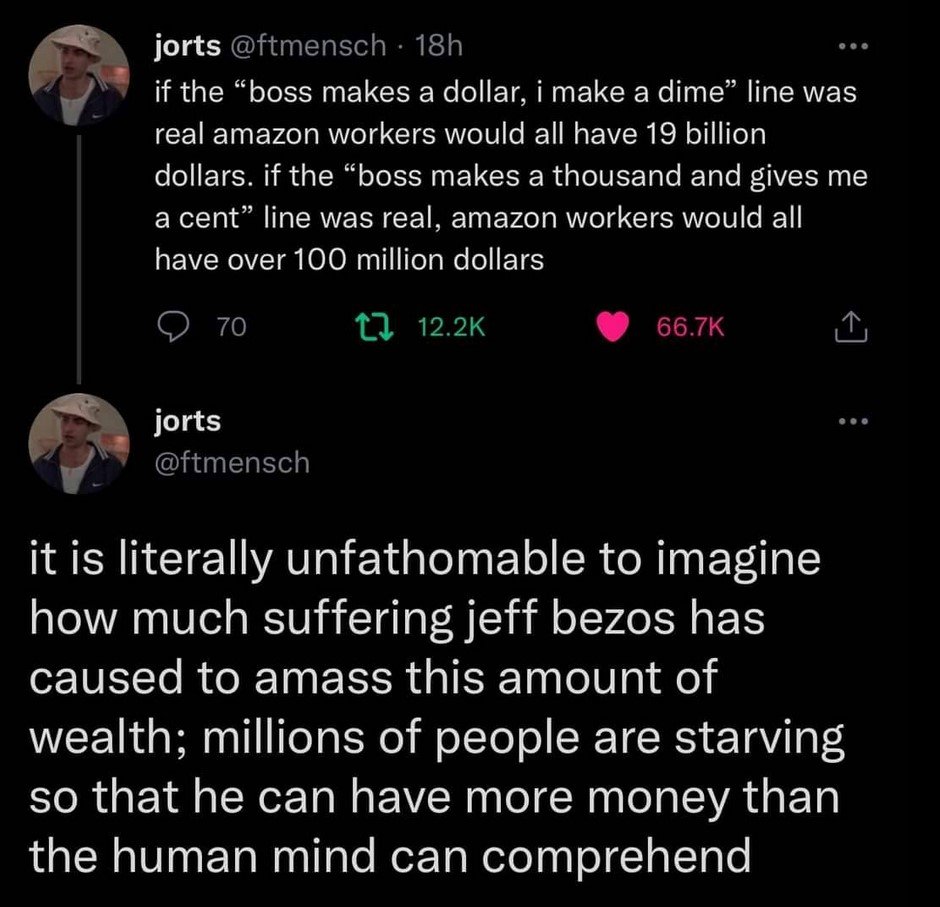
How do we navigate our derangement of scale?

“The confusion may come from what the writer Timothy Clark calls “derangements of scale.” Our experiences as modern global humans, Clark writes, are like being “lost in a small town” and then handed a map of the entire earth for locating yourself and finding your way. In the Anthropocene, he writes, “we have a map, [and] its scale includes the whole earth, but when it comes to relating the threat to daily questions of politics, ethics, or specific interpretations of history, culture, literature, etc., the map is often almost mockingly useless.” Our scales are too imbalanced; we are unable to think the unthinkable. It goes without saying that it can be paralyzing, demoralizing, to be an individual acting as part of the collective, globe-sized world.” - by B. R. Cohen

We are living in a time of polycrisis. If you feel trapped – you’re not alone

“We are living in a time of polycrisis. If you feel trapped – you’re not alone

I hadn’t fully grasped how the idea of a better future sustained me – now I, like many others, find it difficult to be productive.

...

“What feels very different in the present moment,” Hershfield said, “is that it feels like it’s coming from multiple fronts. It’s everything from political uncertainty in the US and elsewhere, health insecurity from the very fresh memory of a global pandemic, job insecurity from AI, geopolitical insecurity, to environmental insecurity.”

All these crises are happening contemporaneously, and because they interact with each other, their effects pile up. Social scientists refer to these stacked crises as a polycrisis. During a polycrisis, radical uncertainty becomes rife.

The lack of predictability creates more doubt about the future, which blocks our ability to imagine ourselves in it.” - by Theresa MacPhail

How to forage for food on the Oregon coast

Mussels right on the beach? Yes please! First link has the OPB video. Can’t find a way to embed it into the blog.

The Pacific Northwest has one of the most abundant tidal ecosystems in the world. The ocean conditions are cold, murky and nutrient-dense, conditions that provide fuel for life on shore.

Alanna Kieffer studied marine biology and eventually left a career in marine research to start her own business – Shifting Tides – where she teaches people how to forage for food in the coastal ecosystem. “

Reviving a Modular Cargo Bike Design from the 1930s

Whoa, this is a pretty cool concept for a cargo bike. I wonder how this would work on our narrow streets? Would cars just get pissed at you for taking up a lane?

“French mobility company Cyclauto has gone through the history books to revive an alternate design from the 1930s.”

“This design, originally by French industrialist Auguste Reymond, places the rider directly above the front wheel. They pedal this wheel directly; there's no chain, reducing maintenance needs. A three-speed gearbox in the hub makes starting easier.”

RTO is bullshit, here's a real life case study from Zillow

RTO is Bullshit. We all know. AI is Bullshit. We all know it. Come on people. Anyways, some interesting data points from Zillow.

“The company has drastically cut costs by shedding offices. Zillow’s total leasing costs reached $54 million in 2022 and dropped to $34 million last year. The company’s total revenue for 2024 was $2.2 billion.

Zillow’s financial results from last year suggest the workforce has been productive while logging in from home. The company reported Tuesday that it beat Wall Street expectations for the last three months of 2024 with a quarterly revenue of $554 million

Zillow shifted to allowing people to work fully remote during the pandemic. It’s been a recruiting and retention tool for Zillow as they “now see four times the number of job applicants for every job we have versus what we did before the pandemic,” Wacksman said.”

What was old is new again....

How to survive being online.

The only way to defeat a narcissistic sociopath is to starve them. Protect yourself from their bullshit, of course, but move away from it. Let them have their stage, but refuse to be their audience.

This isn’t easy. It’s especially difficult because capitalism is an attention economy. The New York Times and The Washington Post love a narcissistic sociopath because they generate clicks and clicks sell ads. Social media loves a narcissistic sociopath for the same reason, but it’s even worse. On social media, we’re the ones carrying their water. Trump says something that he knows will get him attention (i.e. renaming the Gulf of Mexico) and not only does it fire up hundreds of media outlets, who now divert attention to this idiocy, but it also fires up tons of people like me and you, who end up reposting his garbage.

You Can’t Post Your Way Out of Fascism

If there’s one thing I’d hoped people had learned going into the next four years of Donald Trump as president, it’s that spending lots of time online posting about what people in power are saying and doing is not going to accomplish anything. If anything, it’s exactly what they want.

It isn’t quite as simple as “touch grass,” but it also sort of is.

Trusted information networks have existed since long before the internet and mass media. These networks are in every town and city, and at their core are real relationships between neighbors—not their online, parasocial simulacra. 

You can d­iscourse and quote-dunk and fact-check until you’re blue in the face, but at a certain point, you have to stop and decide what truth you believe in. The internet has conditioned us to constantly seek new information, as if becoming a sponge of bad news will eventually yield the final piece of a puzzle. But there is also such a thing as having enough information. As the internet continues to enshittify, maybe what we really need is to start trusting each other and our own collective sense of what is true and good.

We don’t need any more irony-poisoned hot takes or cathartic, irreverent snark. We need to collectively decide what kind of world we actually do want, and what we’re willing to do to achieve it.

tumblr wisdoms

Just some rando screen grabs from tumblr that are pretty spot on I thought I post.

U.S. Calls for Breakup of Ticketmaster Owner

Yaaaaaaaaaaaaaaaaaay! They have gotten away with too much crap for too long. Bring em down.

“In the lawsuit, which is joined by 29 states and the District of Columbia, the government accuses Live Nation of dominating the industry by locking venues into exclusive ticketing contracts, pressuring artists to use its services and threatening its rivals with financial retribution.

Those tactics, the government argues, have resulted in higher ticket prices for consumers and have stifled innovation and competition throughout the industry.

It is time to break up Live Nation-Ticketmaster,” Merrick Garland, the attorney general, said in a statement announcing the suit, which is being filed in the U.S. District Court for the Southern District of New York.”

Woodworking as an escape from the absurdity of software

Another post about getting back into meat space. It’s one of the reasons I enjoy drumming so much I think. I get to physically touch things, tune them, reach out and touch real things. Not a mouse representing something…

A lot of us said at some point things like “I’m gonna throw my laptop out the window and start a farm”. Even my last team leader sent me a message out of the blue saying “I think I’ll run a bar. I want to be a bartender and listen to other people’s stories, not figure out why protobuf doesn’t deserialize data that worked JUST FINE for the past three years”.

Recently, when people started coming with so many unrealistic and absurd expectations and demands about what my apps should do, I started thinking if it would be possible to leave software development for a more physical trade.

You know the drill, sometimes the world of software development feels so absurd that you just want to buy a hundred alpaca and sell some wool socks and forget about solving conflicts in package.json for the rest of your life.

But the combination of the negative tone and getting message after message, some people being so persistent that they insist on sending me those messages through all possible mediums (email, Discord, Twitter, contact form, they’ll find me everywhere), makes it hard to just ignore them.

There’s also this oily smell of AI and machine learning in the tech atmosphere, where I no longer feel relevant and I seem to have stopped caring about new tech when I noticed that 8 in 10 articles are about some new LLM or image generation model. I guess I like the smell of wood better.

Don’t Bleed on the Artwork: Notes from the Afterlife

This makes me long for the days when I used with actual physical media in meat space and not just abstracted 2d representations of 3d things…. LeSigh…

Framing is alchemical, but it’s also just a series of steps, straightforward as a recipe. First, you measure, cut, build, and join the four sides of the frame, using an electric saw or manual chopper, and a joining machine or miter vise to attach and secure the corners. Then you cut the chosen matboard, glass, and backing to fit, unless the art will be framed with no mat or glass, as is customary when framing paintings on canvas, so that the canvas can “breathe.” Then you putty the frame—i.e., smooth and mask dings or irregularities in the wood, and fill, or appear to fill, any visible gaps in the frame’s corners using special putty that exactly matches the frame’s color and texture (which you may have to custom-mix in advance, no big deal, just keep an ice cube tray full of blobs of every possible hue stored under your worktable, and be careful to keep your putty away from the art, best to set up a kind of paper-covered putty station as far away from humanity as possible, where you can work in peace and safety, making sure to check and wash your hands, clothes, and body before re-joining your coworkers). Now place your finished frame face down on the worktable, clean the glass with non-ammonia spray and microfiber cloth—always wear glass-handling gloves for this step, do not bleed on the artwork—and then, finally, making sure you have the correct side of the glass facing outward, place the pane gently into the frame, brush it free of lint, then place the artwork in there (which you’ve attached securely and not crookedly to its mat with acid-free tape, which might take more than one try, or maybe the mat is off by one or two sixteenths of an inch and needs to be recut). Finally, place the backing foamboard on top, and use your point gun to secure everything in place with framer’s points, so that you can turn the whole thing over and inspect for lint, specks, hairs, or other glitches you may have missed, and, when you find these, open the piece back up by removing the framer’s points with pliers or your fingers—you may choose to open only one side or corner of the work if you’re optimistic—and slide your finger or a special eraser or a razor blade in under the glass to remove the debris, wear gloves or not, just don’t bleed on the artwork, then close up the entire thing with the point gun again, roll a two-sided adhesive tape gun over the outside back borders of the frame, cut and attach brown backing paper, shave off the excess paper with a razor blade, then drill holes for the hardware that holds the hanging wire, making sure to first assess the width, depth, and weight of the entire work and the length of the screws you’re planning to use, measure where you want the hardware placed, and make starter holes with an awl or a manual hand-drill before using your power driver to drill in the screws. When your drill slips and punctures your backing paper, use brown paper tape to cover the hole, and it’s a good idea to put matching tape on both sides of the frame back even if you only fucked up one side, thus giving a symmetrical, intentional look. And then you just attach and twist the hanging wire. Use needle-nose pliers or brown paper tape to tamp down any errant wire so the customer doesn’t puncture a fingertip. Don’t bleed on the artwork.

Recruit “insecure overachievers.”

Need a few people I know to stumble upon this piece, “If You’re So Successful, Why Are You Still Working 70 Hours a Week? by Laura Empson “. Pull quote hell to follow.

“In the old days, if you were a white-collar worker, the deal was that you worked as hard as you could at the start of your career to earn the right to be rewarded later on, with security of tenure and a series of increasingly senior positions. This is no longer true.

The 500 interviews I conducted for my book showed a pattern: A professional’s insecurity is rooted in the inherent intangibility of knowledge work. How do you convince your client that you know something worthwhile and justify the high fees you charge? The insecurity caused by this intangibility is exacerbated by the rigorous “up or out” promotion system perpetuated by elite professional organizations, which turns your colleagues into your competitors. How do you convince your boss that you’re worth more than your closest colleague? There is no chance for a professional to rest on their laurels — or even to rest.

Exacerbating this problem, elite professional organizations deliberately set out to identify and recruit “insecure overachievers” — some leading professional organizations explicitly use this terminology, though not in public. Insecure overachievers are exceptionally capable and fiercely ambitious, yet driven by a profound sense of their own inadequacy. This typically stems from childhood, and may result from various factors, such as experience of financial or physical deprivation, or a belief that their parents’ love was contingent upon their behaving and performing well.

...

Your insecurities may have helped to get you where you are today, but are they still working for you? Is it time to acknowledge that you have “made it” and to start enjoying the experience a little bit more? And if your boss is an insecure overachiever, recognize how they are projecting their insecurity onto you — how they make you feel insecure for not being able to keep up with them.

Work exceptionally long hours when you need to or want to, but do so consciously, for specified time periods, and to achieve specific goals. Don’t let it become a habit because you have forgotten how to work or live any other way.”

Quit Taking It Personally

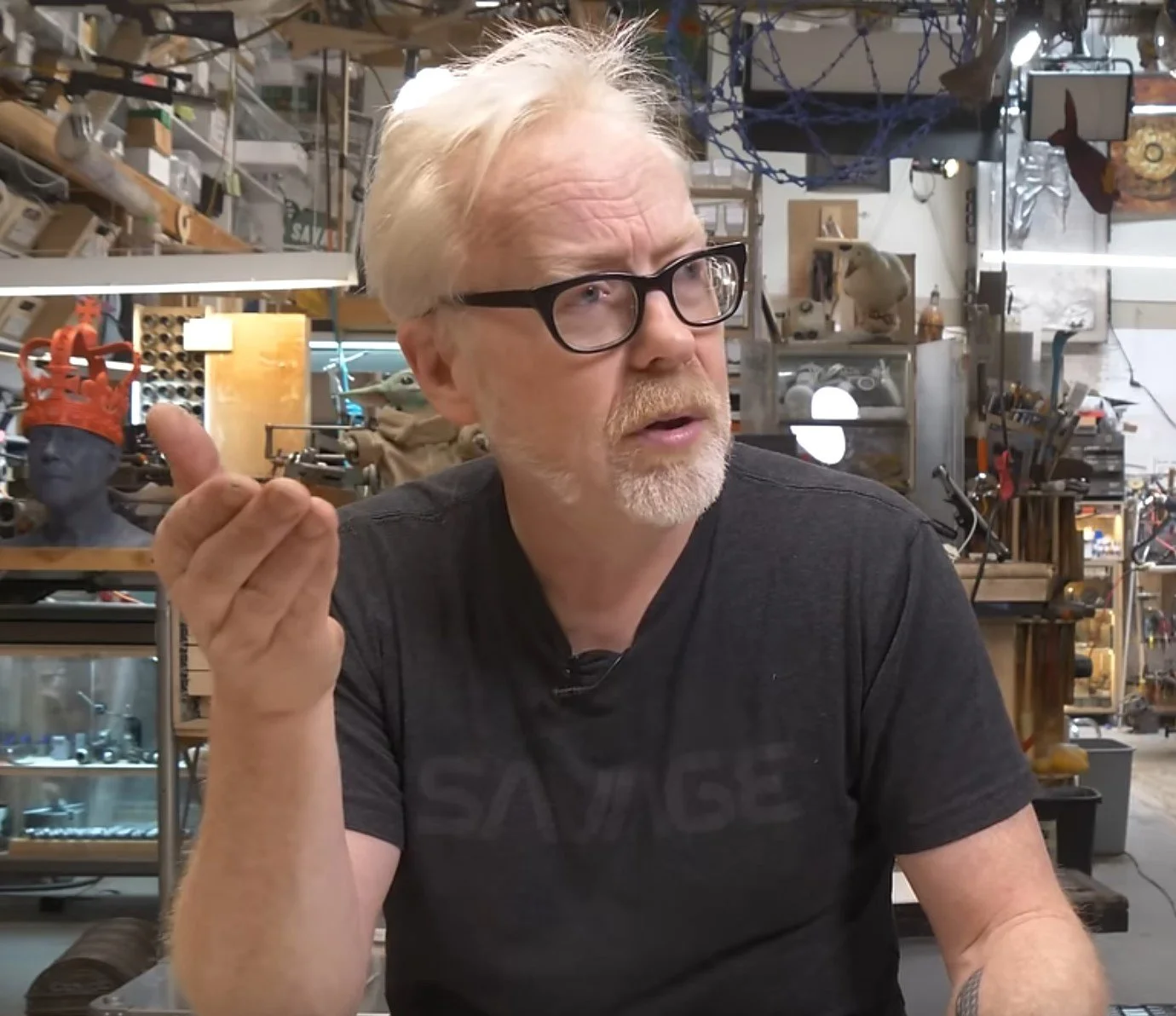
Here is some pretty good advice from Adam Savage when do you creative work for a job / living. I’ve been in these situations in visual art, commercial art and music. It’s all pretty relatable and good advice for the new comers out there.

Thursday updates. Andy Goldsworthy, New work and some live music coming at ya.

For starters, have some meditational (is that a word?) art by Andy Goldsworthy to ring in the fall season that is about to pop here in Portland.

Also, have been pretty damn busy with work so I have not updated the portfolio in a long time but I am starting to gather up some projects to post there soon. Here is some New work in the Wild teasers on that.

Lastly, any Portland people into Americana music out there? If so, head on by to see one of my bands play this Saturday!