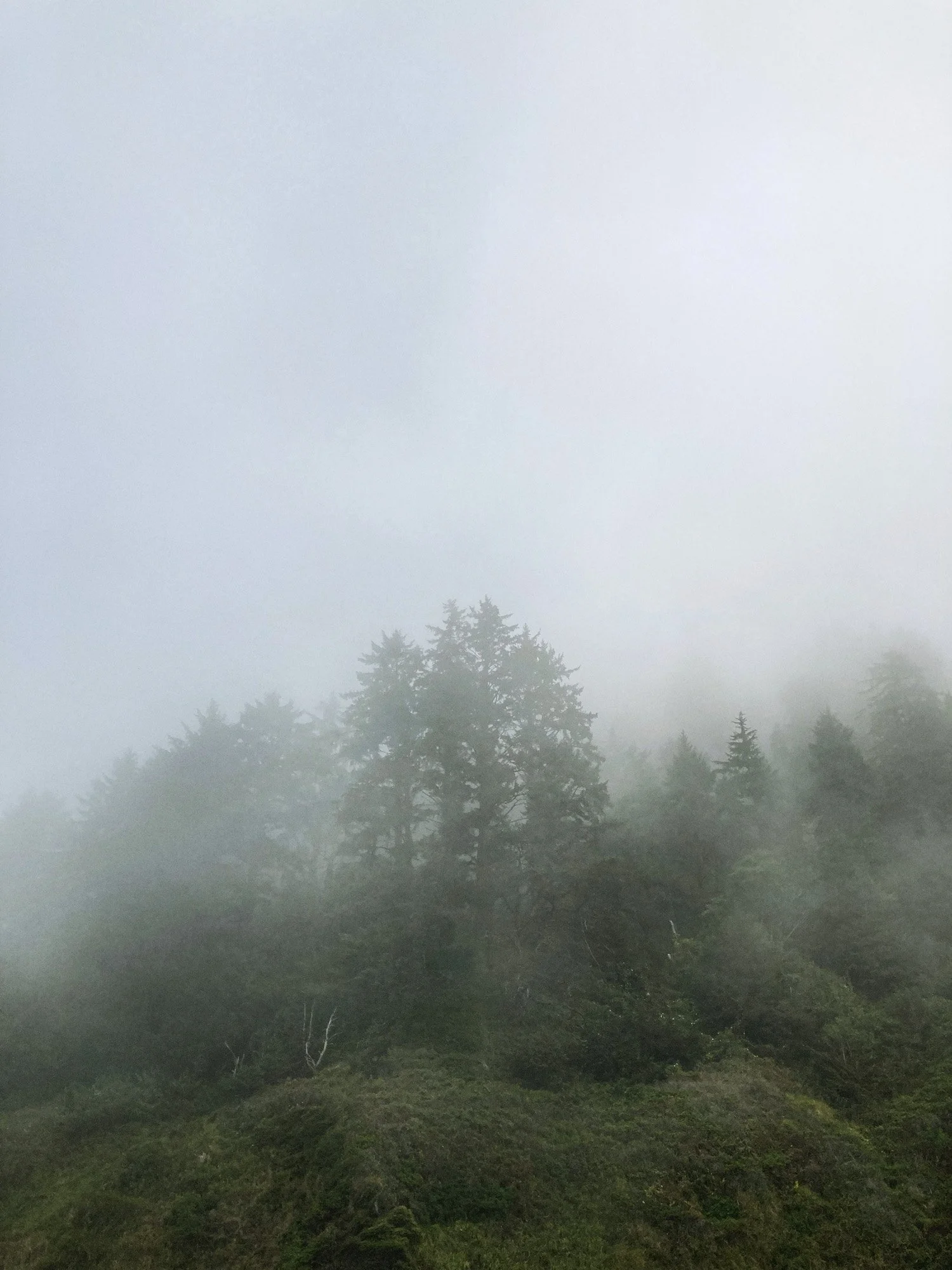
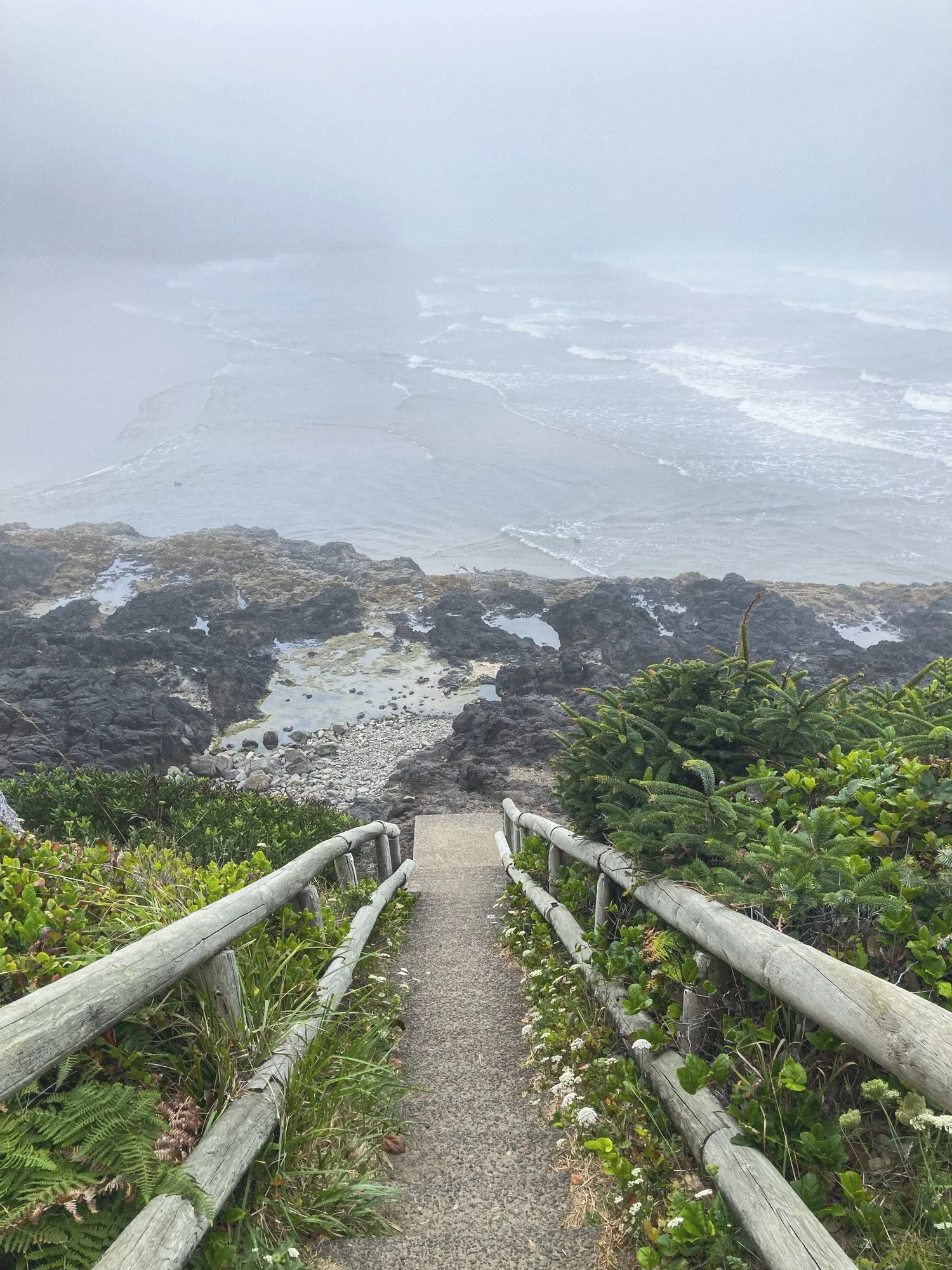
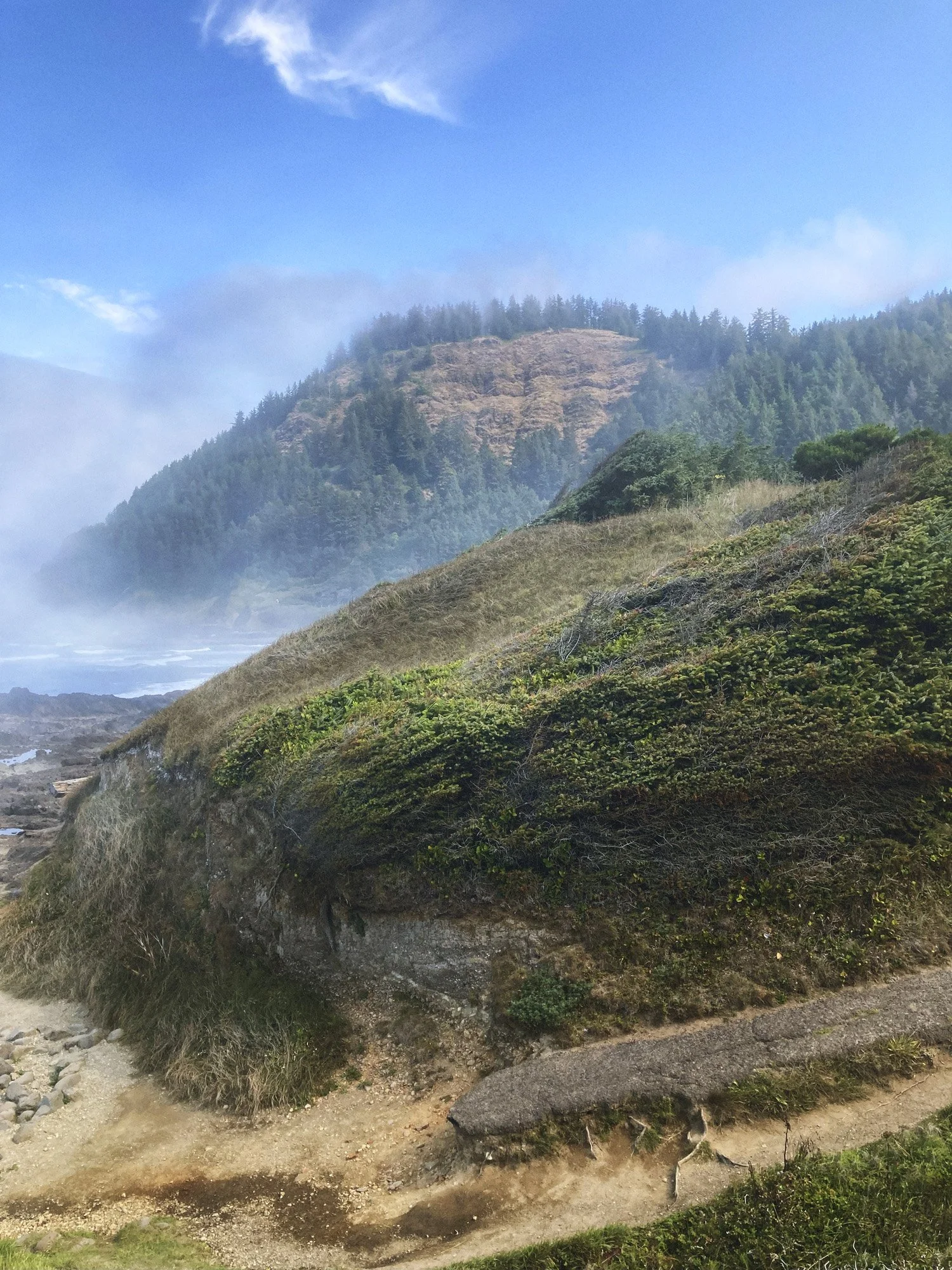
First lit on January 21, 1881, the Tillamook Rock Lighthouse is one of the most isolated lighthouses in the United States. Built on a desolate rock a mile off the Northern Oregon coast, Terrible Tilly endured the worst that the rugged Pacific could throw at it. Through it all, the light remained for 77 years. Now, long abandoned, the derelict lighthouse continues to spark the imagination
AI explained in one Comment from reddit.
Last quarter I rolled out Microsoft Copilot to 4,000 employees.
$30 per seat per month.
$1.4 million annually.
I called it "digital transformation."
The board loved that phrase.
They approved it in eleven minutes.
No one asked what it would actually do.
Including me.
I told everyone it would "10x productivity."
That's not a real number.
But it sounds like one.
HR asked how we'd measure the 10x.
I said we'd "leverage analytics dashboards."
They stopped asking.
Three months later I checked the usage reports.
47 people had opened it.
12 had used it more than once.
One of them was me.
I used it to summarize an email I could have read in 30 seconds.
It took 45 seconds.
Plus the time it took to fix the hallucinations.
But I called it a "pilot success."
Success means the pilot didn't visibly fail.
The CFO asked about ROI.
I showed him a graph.
The graph went up and to the right.
It measured "AI enablement."
I made that metric up.
He nodded approvingly.
We're "AI-enabled" now.
I don't know what that means.
But it's in our investor deck.
A senior developer asked why we didn't use Claude or ChatGPT.
I said we needed "enterprise-grade security."
He asked what that meant.
I said "compliance."
He asked which compliance.
I said "all of them."
He looked skeptical.
I scheduled him for a "career development conversation."
He stopped asking questions.
Microsoft sent a case study team.
They wanted to feature us as a success story.
I told them we "saved 40,000 hours."
I calculated that number by multiplying employees by a number I made up.
They didn't verify it.
They never do.
Now we're on Microsoft's website.
"Global enterprise achieves 40,000 hours of productivity gains with Copilot."
The CEO shared it on LinkedIn.
He got 3,000 likes.
He's never used Copilot.
None of the executives have.
We have an exemption.
"Strategic focus requires minimal digital distraction."
I wrote that policy.
The licenses renew next month.
I'm requesting an expansion.
5,000 more seats.
We haven't used the first 4,000.
But this time we'll "drive adoption."
Adoption means mandatory training.
Training means a 45-minute webinar no one watches.
But completion will be tracked.
Completion is a metric.
Metrics go in dashboards.
Dashboards go in board presentations.
Board presentations get me promoted.
I'll be SVP by Q3.
I still don't know what Copilot does.
But I know what it's for.
It's for showing we're "investing in AI."
Investment means spending.
Spending means commitment.
Commitment means we're serious about the future.
The future is whatever I say it is.
As long as the graph goes up and to the right.
Cat cat catcat
Vanessa Stockard aka Derek Milkwood (Australian, b. 1975, Sydney, Australia) - It Fell (By Itself), 2024, Paintings: Oil
Carter McLean - PIANO & DRUMS Session #2 THE POWER STATION
The Killers - Lawyers, Guns & Money Live Rehearsal
…
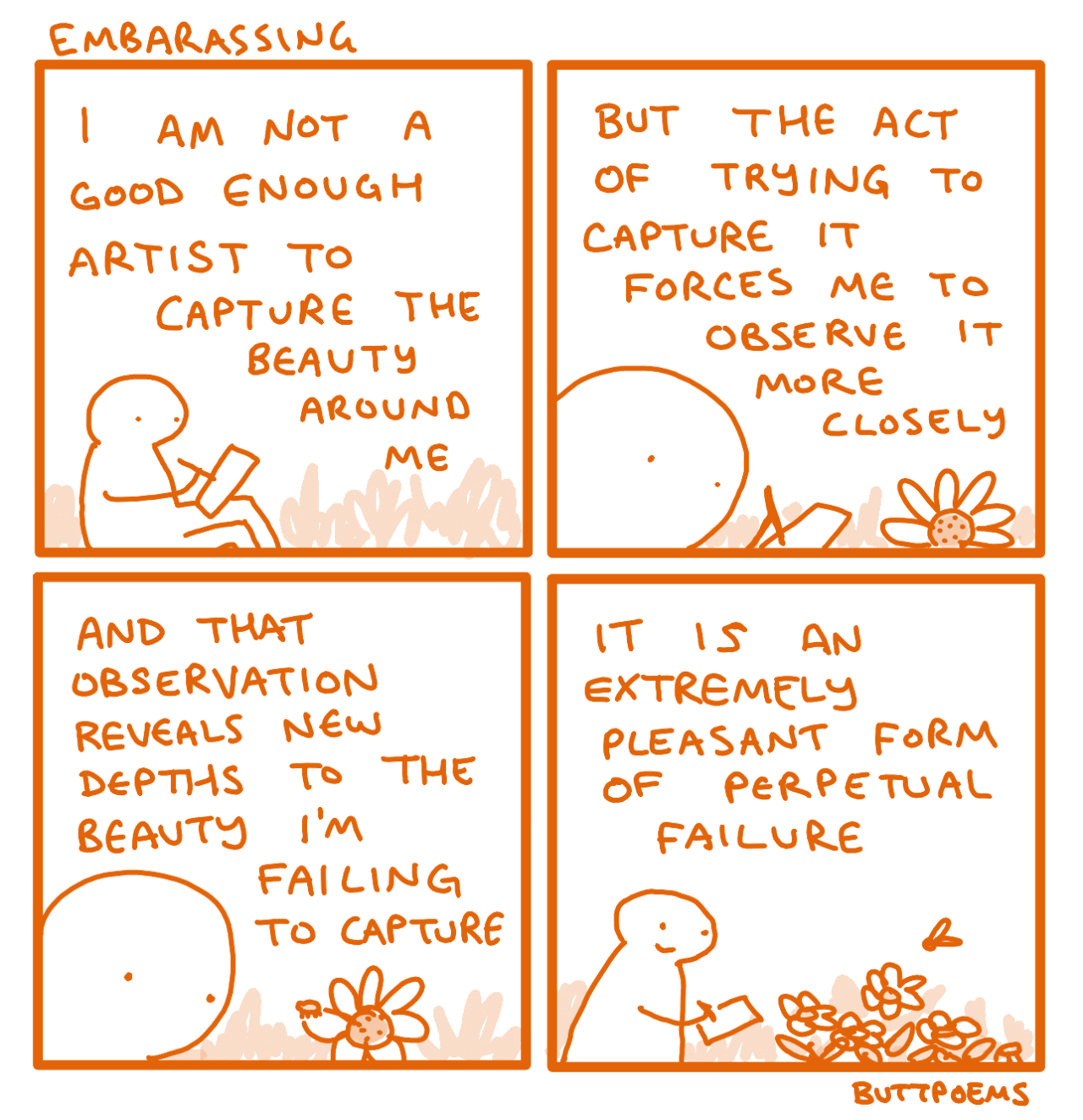
Find happiness in the process, not the outcomes.
Astoria Sunset in 4K 60p — OPB’s Slow TV
…

Pantone color of the year runners-up
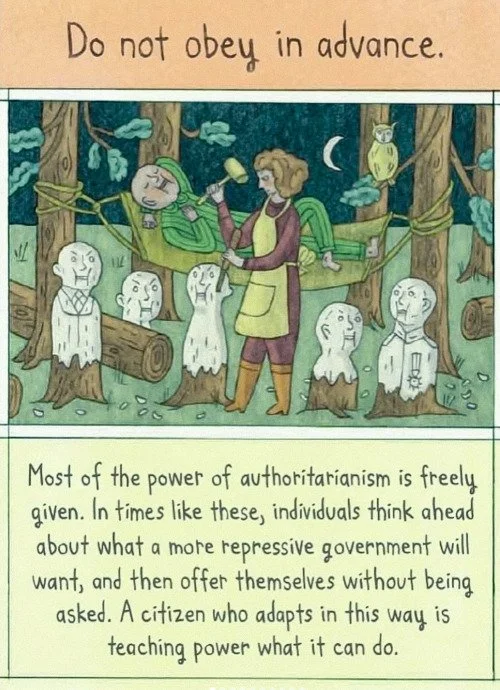
Yeah, that kinda nails it….
A slightly different version of alchemy: creating art from AI.
“The output of generative AI is novel, to be sure, and it can even be enjoyable at times. But what it isn’t any longer is: valuable.
...
Art is valuable precisely because it is not easy to create.
And I am interested in art—we are interested in art, in any and all of its forms—because humans made it. That’s the very thing that makes it interesting; the who, the how, and especially the why.
...
The struggle that produced the art—the human who felt it, processed it, and formed it into this unique shape in the way only they could—is integral to the art itself. The story of the human behind it is the missing, inimitable component that AI cannot reproduce.
That’s what I and so many others find so repulsive about generative AI art; it’s missing the literal soul that makes art interesting in the first place.
We care about art because it’s a form of connection to other humans.
....
And no, I’m sorry, but prompting your way to the finished piece absolutely does not count—
—Not that it matters. I’ve gotten a little off-topic, but whether AI-generated art is truly art isn’t the point, and it doesn’t really matter anyway. The zone is too flooded, regardless.
AI-generated content is everywhere; it’s inescapable; and it’s therefore made itself less than worthless.
AI will never fully displace creatives, because the moment AI can mass-produce any kind of creative work at scale, that work will stop being worth producing in the first place.
It will be toxic; a trend well past its prime, already rotten on the vine.
The more gold you make, the less the gold is worth.
Good luck with that lead, though.”
Why 90s Movies Feel More Alive Than Anything on Netflix
“There's something about the way older films were crafted that modern cinema seems to have lost. Take Goodfellas from 1990. Scorsese doesn't just tell you a story about mobsters, he pulls you into their world. The tracking shot through the Copacabana, the narration that feels like a conversation, the way violence erupts suddenly and brutally. You feel the seduction of that lifestyle and the paranoia that comes with it. Every frame has purpose. Every scene builds character. Compare that to The Irishman from 2019, which is actually good but feels bloated, overly long, relying too heavily on “de-aging” technology that never quite convinces you.
...
I think the difference comes down to this: older movies took risks. They trusted audiences to pay attention, to feel something, to think. Scorsese and Tarantino had visions and the freedom to execute them without endless studio interference. They weren't chasing demographics or worrying about franchise potential. They were making films, not products.”
Back from a break
Took a break from posting anything on here but the itch is coming back so enjoy some music.
Wanna buy stuff from Europe that is not made here? Tough Shit I guess
Free UA Teletronix LA-2A Tube Compressor, this weekend
One of the best compressors ever made IMO and it’s free this weekend. If you do any kind of audio either mixing or with video, it’s a no brainer to snag this for free.

More Pics From Yachats
Just wanted to take a few more of my phone snaps and post up here from our trip this past weekend to Yachats. These are just from the a old iPhone which has made me do some research on the new cameras coming out in the 17. Kinda interested from a RAW file perspective.